One of the most common questions I hear from patients is: “What supplements should I be taking?” My answer is always the same. It depends on where you are in your fertility journey and how your body is changing.
Fertility support is not one-size-fits-all. What your body needs at 27 is genuinely different from what it needs at 38 or 43. When we understand that, supplement choices become much more purposeful and much less overwhelming.
Why Fertility Support Changes with Age
Fertility support should evolve as your body evolves. That is simply good medicine.
In your 20s and early 30s, the conversation is usually less about egg quality decline and more about foundational health. Many of the women I see at this stage are managing PCOS, irregular cycles, thyroid dysfunction, chronic stress, inflammation, nutrient deficiencies, or blood sugar imbalance. These are the real obstacles standing between them and conception.
By the mid-to-late 30s, the picture shifts. Egg quality and mitochondrial function move to the center of the conversation. Eggs require an enormous amount of energy to mature properly, fertilize, and develop into healthy embryos. As we age, oxidative stress accumulates and the mitochondria inside our eggs become more vulnerable. That is the biological reality, and it is why targeted nutritional support matters more with each passing year.
Best Fertility Supplements in Your 20s and Early 30s
For women in their 20s and early 30s, a high-quality prenatal is almost always the starting point. But not just any prenatal. I want to see one that actually covers what matters.
Key nutrients to look for include methylated folate, choline, magnesium, vitamin D, omega-3 fatty acids, and iron when indicated by bloodwork.
For women dealing with PCOS or insulin resistance, I often add nutrients like inositol, alpha-lipoic acid, NAC, and magnesium. These can make a meaningful difference in supporting ovulation, blood sugar regulation, and reducing systemic inflammation.
As you move into the late 30s, nutrients that directly support egg quality become increasingly important. I am talking about CoQ10, PQQ, NAC, selenium, zinc, magnesium, and vitamin D. These are not just trendy supplements. There is real science behind why they matter for cellular energy and reproductive function.
Best Fertility Supplements for Women Over 40
After 40, supplementation needs to become even more precise and intentional.
The nutrients I most commonly recommend at this stage include CoQ10, PQQ, NMN, NAC, alpha-lipoic acid, omega-3s, choline, vitamin D, magnesium, zinc, selenium, and a broad-spectrum antioxidant base.
Here is something I tell my patients over 35 and especially those over 40: a prenatal alone is not enough. It was never designed to address the level of mitochondrial and oxidative support that egg quality requires at this stage of life.
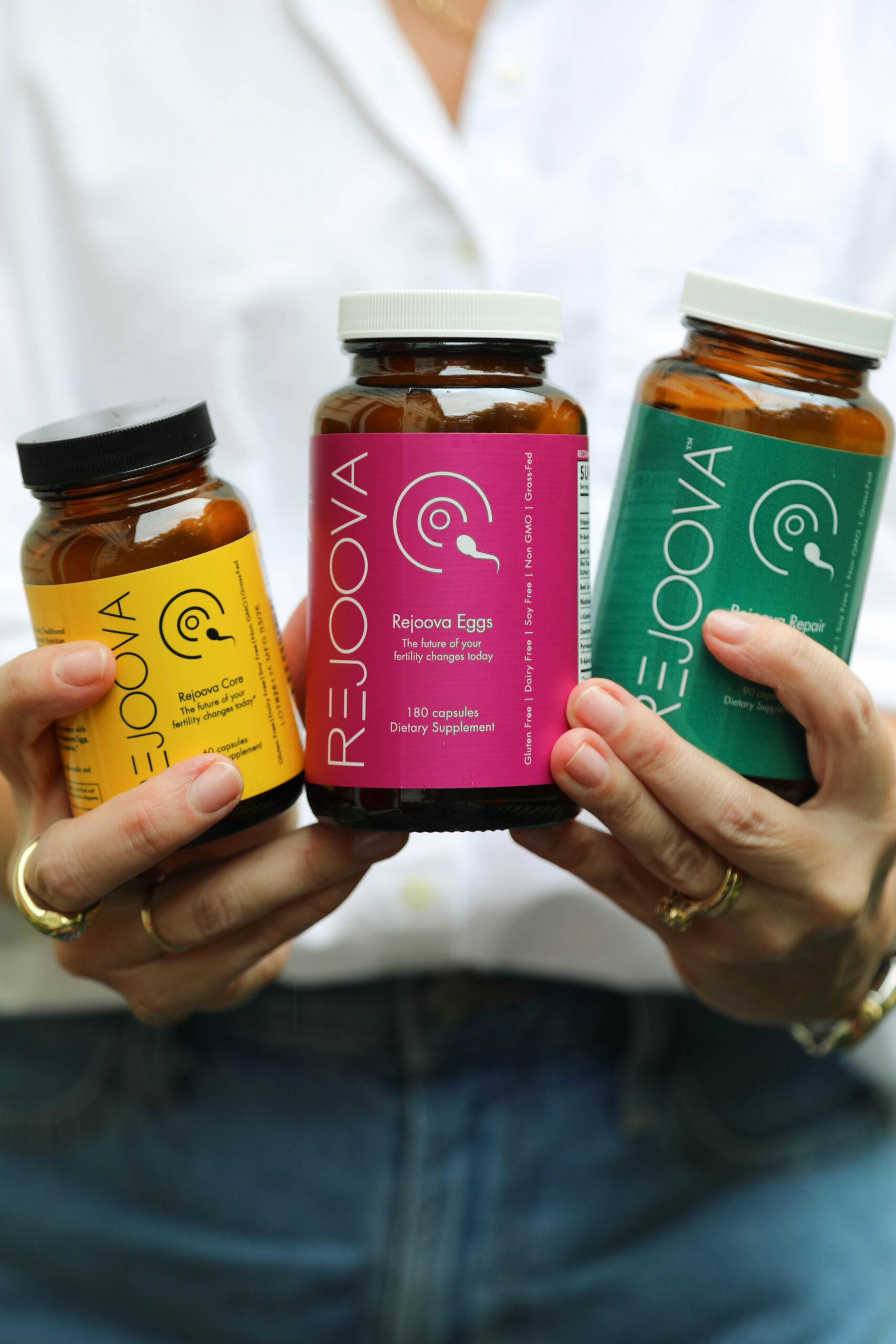
That is precisely why Rejoova Eggs and Rejoova Repair were developed. These formulas were built specifically to support egg quality, mitochondrial function, oxidative stress, inflammation, and hormone balance in a way that a standard prenatal simply cannot.
If male factor fertility is also part of the picture, Rejoova Sperm may help support sperm motility, morphology, count, and DNA integrity.
I want to be clear about something. The goal here is never to pile on supplements simply because you are getting older. The goal is to choose the right support for the specific stage of fertility you are in. More is not better. Targeted is better.
If you are unsure where to start, that is exactly what I am here for.
Dr. Zaher Merhi is a Co-Founder of Rejoova and the founder of Rejuvenating Fertility Center, with locations in Manhattan, Connecticut, Long Island, Westchester, and Brooklyn. He specializes in less-invasive IVF, ovarian rejuvenation, and personalized fertility care for women of all ages.