What Egg Quality Actually Means, and Why It Matters More Than You Think
Let me be direct with you: egg quality is one of the most important factors I evaluate in every patient who walks through my door, and yet it is one of the most misunderstood concepts in reproductive medicine.
Egg quality is not just about whether an egg fertilizes. It affects every step of what comes next embryo development, the quality of that embryo, whether it successfully implants, the risk of miscarriage, and whether the pregnancy continues to develop normally. A healthy egg needs strong mitochondrial function, chromosomal stability, healthy DNA, and sufficient cellular energy to complete maturation properly. When any one of those pieces is compromised, the entire process can be affected.
I have sat across from hundreds of women who were told by other doctors that poor egg quality was simply a consequence of age, and that nothing could be done. I understand why clinicians say this. Age is a real factor, especially after 35. But in my clinical experience, age is rarely the whole story, and telling a woman there is nothing she can do is simply not acceptable to me.
Here is what I see in my practice every day: inflammation, oxidative stress, insulin resistance, thyroid dysfunction, endometriosis, PCOS, autoimmune conditions, poor sleep, chronic stress, environmental toxin exposure, and nutrient deficiencies. All of these can negatively affect egg quality at any age. These are not minor footnotes. They are treatable, addressable contributors that we have the ability to work on together.
Recognizing the Signs
Many of my patients first begin to suspect a problem with egg quality after experiencing one or more of the following:
- Recurrent miscarriage
- Poor embryo quality during IVF
- Failed IVF cycles
- Low fertilization rates
- Irregular cycles
- Symptoms of hormonal imbalance
If you have been through any of these, I want you to hear this clearly: it does not mean your journey is over. It means we need to look deeper, not give up.
The Most Important Concept I Share With Every Patient: Timing
One of the first things I explain to every patient considering egg quality support is this: eggs do not develop overnight.
The process of egg maturation spans approximately 90 to 100 days. That three-month window before conception or before an IVF cycle is when your choices have the most impact. This is why I encourage women to start optimizing their health and nutrition well in advance, not the week before a retrieval.
Building the Foundation First
Before we talk about supplements, we have to talk about the environment your eggs are living in. No supplement can fully compensate for a lifestyle that is working against your biology.
The foundation of egg quality support starts with:
- Consistent, restorative sleep – your reproductive hormones are deeply regulated by sleep cycles
- Blood sugar balance – insulin spikes drive inflammation and hormonal disruption
- Reducing systemic inflammation – through diet, movement, and stress management
- Adequate protein intake – eggs need amino acids to develop properly
- Minimizing toxin exposure – plastics, pesticides, and endocrine disruptors are real threats to ovarian function
- Stress management – not just as self-care, but because chronic cortisol directly impairs reproductive hormone signaling
Once that foundation is in place, we can layer in more targeted support.
Targeted Nutritional Support for Egg Quality
The science around nutrients and egg quality has grown significantly in recent years, and I follow this research closely. Certain nutrients have been shown to support mitochondrial function, reduce oxidative damage, balance hormones, and improve embryo development.
These include CoQ10, PQQ, NAC (N-acetyl cysteine), alpha-lipoic acid, NMN, magnesium, omega-3 fatty acids, vitamin D, zinc, selenium, choline, and methylated folate.
For many of my patients, particularly those over 35, those with low AMH, recurrent miscarriage, endometriosis, unexplained infertility, or prior failed IVF cycles, a standard prenatal vitamin simply is not enough. These women have higher cellular demands, and standard formulations were not designed with those needs in mind.
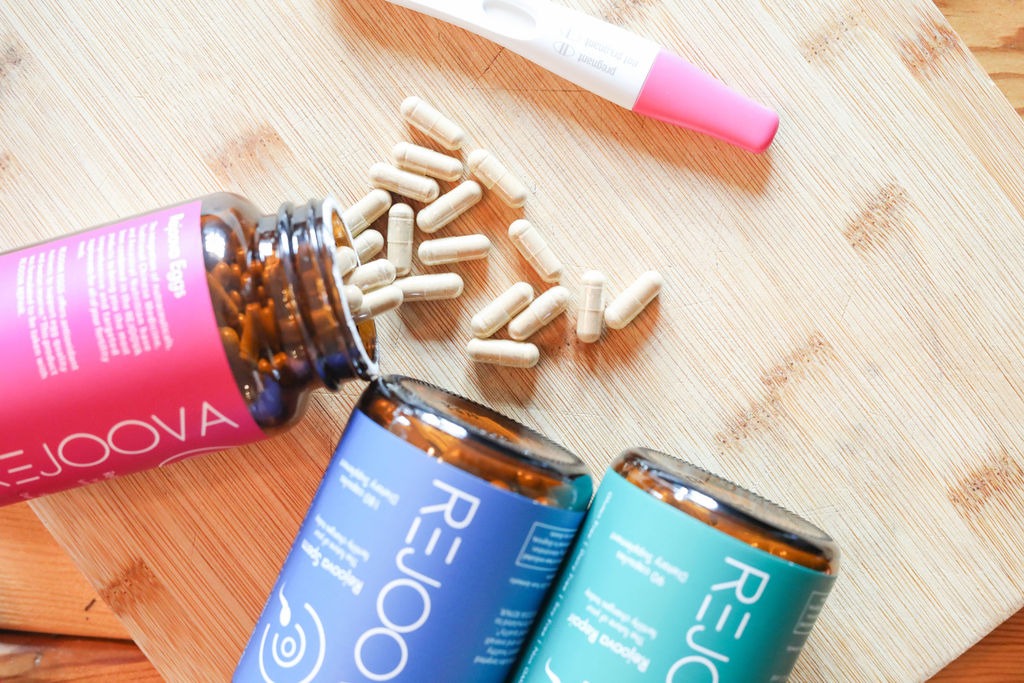
This is exactly why I developed the Rejoova supplement line. Rejoova Eggs was formulated specifically to support ovarian reserve and egg quality. Rejoova Repair addresses oxidative stress, mitochondrial function, inflammation, and cellular repair, the deeper mechanisms that a prenatal alone cannot reach. These are not generic supplements. They are the result of years of clinical experience and a commitment to giving my patients every evidence-based advantage I can offer.
How Do You Know If It’s Working?
This is a question I hear often, and I understand the frustration behind it. You cannot look at an egg under a microscope at home. Progress in this area is not always immediately visible, but it is real, and many women do notice changes as the months unfold.
Signs that your egg quality may be improving include:
- More regular, predictable cycles
- Improved cervical mucus quality
- Better sustained energy throughout the day
- Fewer or less severe PMS symptoms
- More restful sleep
- And in the IVF setting, improved embryo quality or higher fertilization rates
These are not just cosmetic improvements. They are your body signaling that the cellular environment is shifting in the right direction.
One More Thing: Do Not Forget Your Partner
I always say this to my couples: fertility is a team effort. The best outcomes I see in my practice come from both partners optimizing together. Sperm quality matters enormously — for fertilization, for embryo development, and for the health of the pregnancy. Supporting egg quality while ignoring sperm quality is like training for a race with one shoe on.
A Final Word From Me
I grew up in Lebanon, and one of the earliest lessons I carried with me into medicine was this: hope is not passive. It requires action, knowledge, and a partner who believes in your potential as much as you do.
If you have been told your eggs are too old, your AMH is too low, or that IVF will not work for you, I encourage you not to accept that as a final verdict. I have helped women who were told exactly those things go on to have healthy pregnancies. What I have never been willing to do is tell a patient there is nothing more we can try.
Egg quality is something we can work on. The three months ahead of you matter. Let’s make them count.
Dr. Zaher Merhi is a Co-Founder of Rejoova and the founder of Rejuvenating Fertility Center, with locations in Manhattan, Connecticut, Long Island, Westchester, and Brooklyn. He specializes in less-invasive IVF, ovarian rejuvenation, and personalized fertility care for women of all ages.